

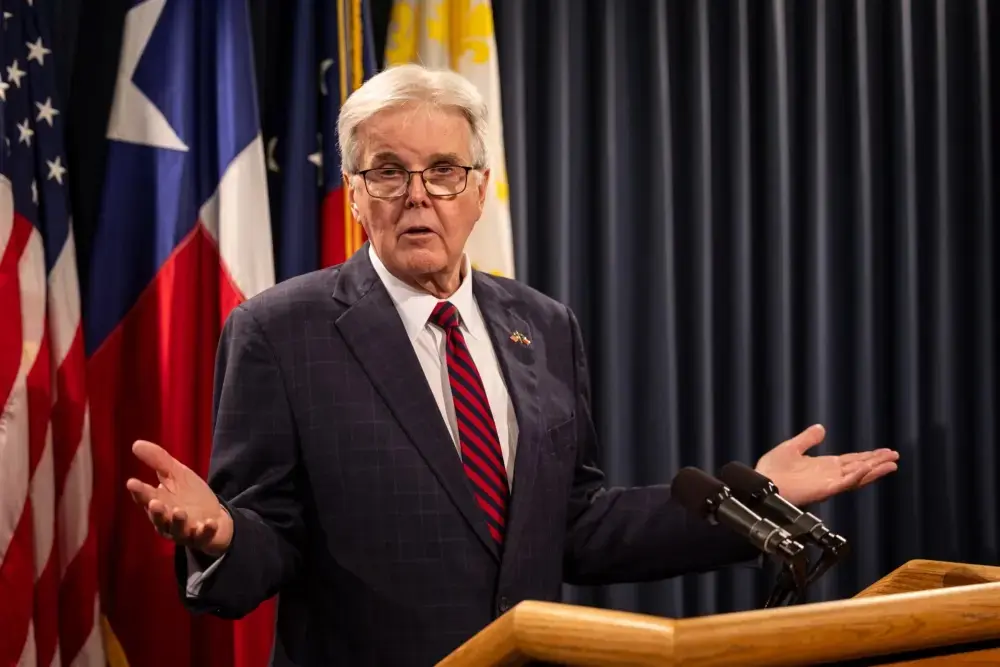
In June 2025, Texas Lt. Gov. Dan Patrick gave Texans an ultimatum on marijuana legalization.
"I'm not going to legalize marijuana in Texas, and if people want to vote me out of office for that, so be it," Patrick said.
Last week, voters did just that as Patrick was among the more than half a dozen statewide Texas Republicans swept out of office by the historic nationwide Democratic wave. On Monday — the first day of the bill filing period for the 90th Texas Legislature— Texas Democrats wasted no time in taking the first tentative steps toward making Texas the 25th state to legalize the recreational use of marijuana.
Among the more than 1,000 bills filed on Monday were two nearly identical bills from State Reps. John H. Bucy IIIand Joe Moodythat would legalize marijuana for Texas adults 21 and older.
Sarah Todd, the director of the Texas Cannabis Policy Center — a pro-marijuana advocacy group — said the issue of legalizing marijuana in Texas was key to Lt. Gov.-elect Vikki Goodwin's upset victory over Patrick.
"I think everyone is very excited for new leadership and especially Vikki having ran on the issue of fixing our hemp laws," Todd said. "I think [legalization] is very, very likely."
Both bills would allow adults in Texas to possess up to 2 ounces of cannabis and grow up to 12 cannabis plants for personal use on their own property. The bills would also introduce new regulations for marijuana retailers, including a requirement that retailers obtain a license.
A third bill — SB 237, authored by Texas State Senator Carol Alvarado — was also filed this week and would allow Texas adults to possess up to 2.5 ounces of cannabis and no more than 15 grams of cannabis concentrate.
But before any of the bills become law, they will still need to pass through the legislative process, including being approved by the State Senate, which still has a Republican majority.
"The Senate is going to be a challenge to get an adult-use legalization bill passed," Todd said. "However, we feel very positive that everyone is ready to work together, and the message has been sent loud and clear: Texans want legal access to cannabis products."
While Republicans may still hold a majority in the state Senate, Goodwin's victory over Patrick means a Democrat could have sweeping power over the upper chamber’s priorities, assuming Republican senators don't handicap her office. Historically, the lieutenant governor of Texas has wielded great influence over the Senate, including the power to make committee appointments and control which bills make it to the Senate floor.
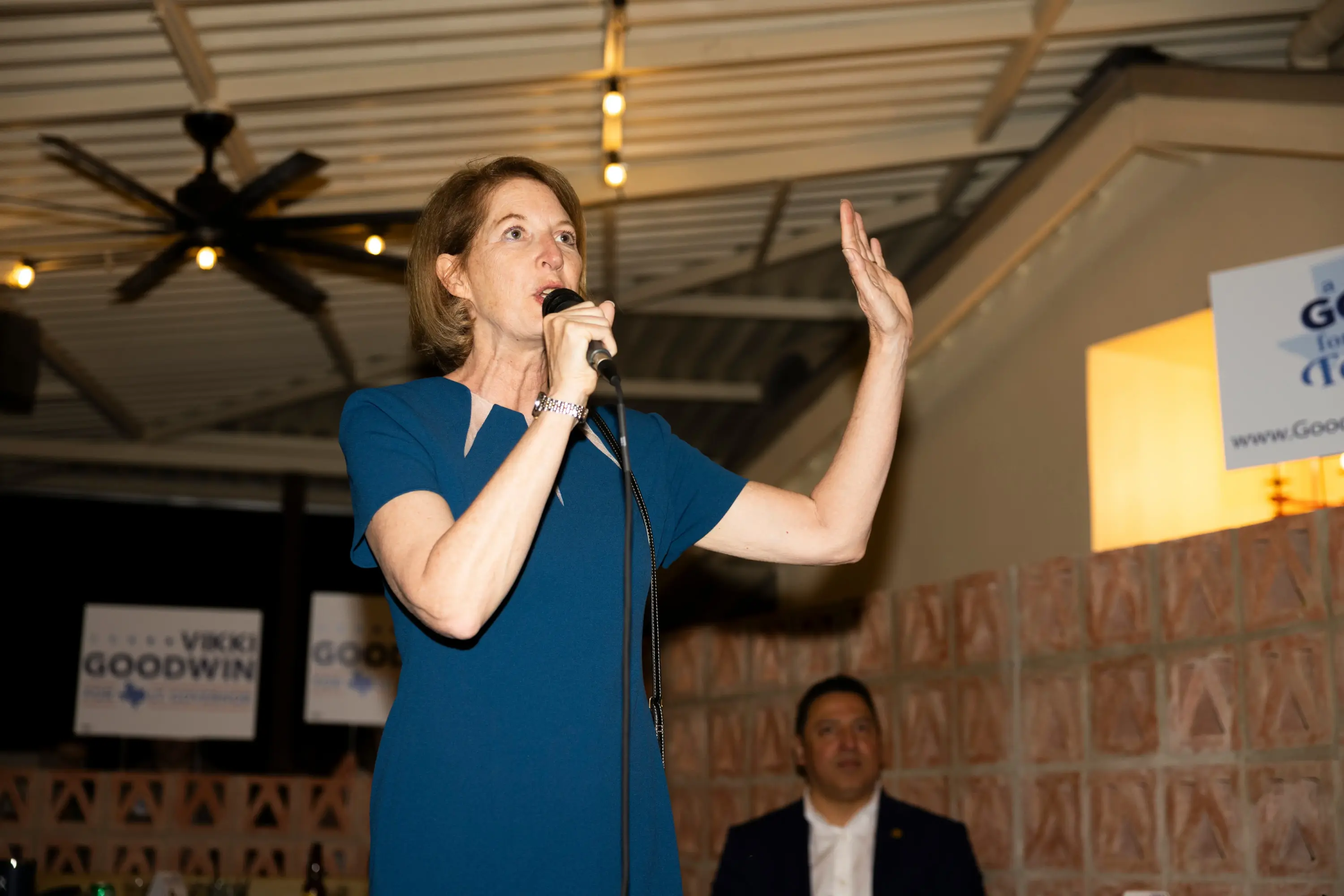
Speaking in Austin on Tuesday, Goodwin reaffirmed her support for regulating Tetrahydrocannabinol (THC), the primary psychoactive compound found in marijuana.
"I think that we need regulation around THC," Goodwin said. "I'm not interested in a full ban on THC, but there's a lot of details to be worked out, and I look forward to working with all of the senators to work out those details."
Todd said she is thankful for the bills already filed by Bucy and Moody but believes the bills in their current form put too much of a tax burden on growers and retailers.
"I think these bills have a long way to go. For one, the tax structure will make legal cannabis unnecessarily expensive," she said. "We believe one of the goals of regulation is to give consumers an option that's competitive with the alternatives, being the illicit market."
Currently, both bills would impose a 20% tax on the sales price of cannabis and cannabis products or a 15% tax on the sales price of bulk cannabis bought by retailers from growers. For comparison, Texas' sales tax is 6.25%.
"If the tax makes the products unaffordable, it's working against the entire purpose of creating a regulated market," Todd said. "It's untenable."
If Texas does decide to legalize the sale of marijuana, Todd said legislators also need to address decriminalization.
"Decriminalization needs to happen in lockstep with these bills," Todd said. "The penalties for concentrated marijuana products in Texas are incredibly harsh and have a long way to go. So that is our number one priority this session: decriminalization for possession of cannabis. That right there will free up a lot of law enforcement time and help a lot of everyday Texans stay out of the legal system."
RELATED: Houston passes Prop A, deprioritizing marijuana enforcement, banning no-knock warrants
Under current Texas law, it is a misdemeanor to have 2 ounces or less of marijuana and a state jail felony to possess more than 4 ounces. Possession of concentrated marijuana products — such as vape cartridges, oils, or waxes — carries a steeper penalty of a state jail felony for any amount of marijuana, or a third-degree felony for more than 1 gram.
Bucy, who filed one of the two state house marijuana legalization bills on Monday, also filed a separate bill aimed at decriminalizing concentrated amounts of marijuana.
What's currently legal in Texas:

Almost eight years ago, the federal government passed the 2018 Farm Bill into law.
The bill classifies hemp as cannabis containing no more than 0.3% delta-9 THC, opening up a loophole for the legal sale of THC products at or below that threshold. Since then, a more than 2-billion-dollar hemp industry has developed in Texas, according to the Texas Hemp Business Council, a Texas hemp industry advocacy group.
Cynthia Cabrera is a board member for the Texas Hemp Business Council and the chief strategy officer for Hometown Hero — an Austin-based THC-hemp edibles company that was directly targeted by Patrick when he attempted to close the Farm Bill loophole in Texas.
Cabrera said voters' decision to oust Patrick was a direct result of his "crusade" against the Texas hemp industry.
"I can tell you that no one moves to Texas to have the government tell them what they can and cannot do, and Dan Patrick's loss was a massive rebuke of his crusade to insert himself in everyone's personal life," Cabrera said. "So, I can tell you that the mood in the hemp space after the election was pure jubilation."
According to Cabrera, Texas' hemp industry is separate from the legal marijuana industry — which, in states that have legalized it, relies on state laws rather than the 2018 Farm Bill loophole.

Cabrera said states that have legalized recreational marijuana have actually made it harder for the hemp industry to operate.
"The marijuana industry is constantly trying to kill the hemp industry, but the hemp industry is fine with the marijuana industry," she said.
The main issue, Cabrera said, is that legalization at the state level typically introduces new licensing requirements that the Texas Hemp Business Council described as limiting.
"The Texas Hemp Business Council is in favor of open licenses," Cabrera said. "We do not support limited licenses. That's how every state has their marijuana program. ... it doesn't work. You shut people out of the market. The products are prohibitively expensive. Black and brown people, women get cut out of the market. They're not good models."
However, the argument over licensing may soon become moot as a federal hemp ban, meant to close the loophole created by the 2018 Farm Bill, is set to go into effect on Dec. 11.
And while Cabrera and the Texas Hemp Business Council still have reservations about what legalization could mean for the state's hemp industry, Cabrera said she is not against a theoretical future in which both the hemp and legal marijuana industries in Texas could coexist.
"Listen, if there is a universe in which there can be a recreational marijuana market that allows the hemp industry not to be destroyed, great," Cabrera said. "And then people can make a decision whether they want duper potent products or whether they want hemp products they've gotten used to."
Copyright 2026 Houston Public Media News 88.7


